Why weight, reach, access and site conditions can change the crane, crew, planning and cost behind every lift.
When planning a construction or infrastructure project, it’s common to receive rigging or crane hire quotes that vary dramatically in price — sometimes by thousands of dollars. At first glance, each company seems to offer the same service. So why the difference?
The answer lies in lift complexity. Every lift is unique, and factors such as angles, access, and weight can significantly alter how much equipment, crew, and time are required to complete the job safely and efficiently.
In this guide, you’ll learn exactly what affects rigging quotes, how to plan smarter lifts, and why understanding lift complexity can save both money and downtime on your next project.
⚙️ What Is Lift Complexity?
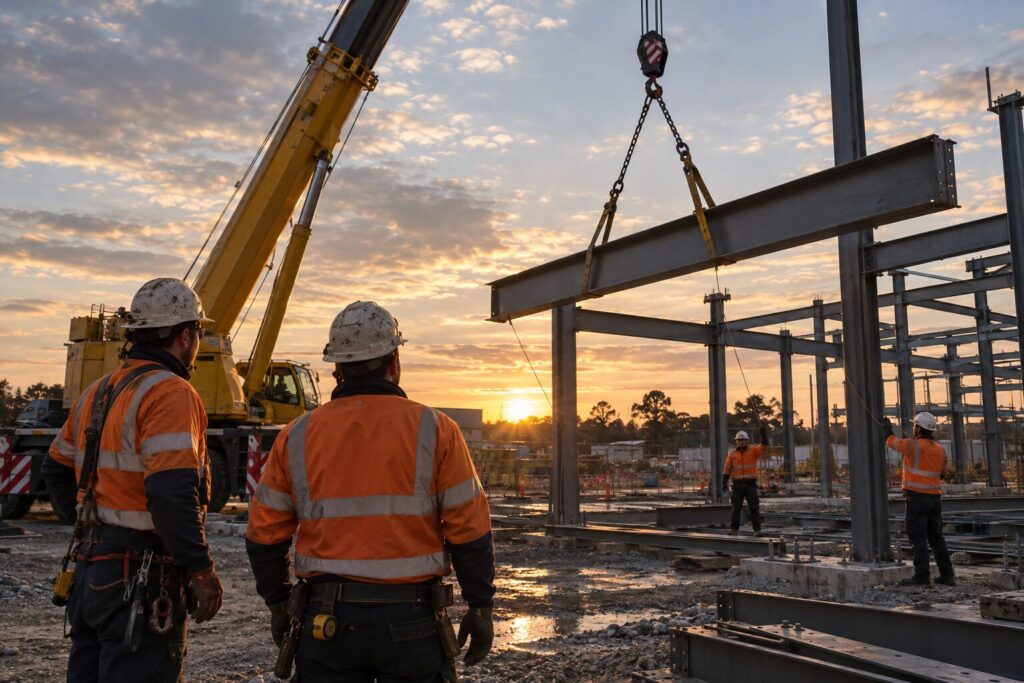
Lift complexity describes the level of difficulty and risk involved in a lifting operation. Even seemingly simple lifts can become complex depending on load dimensions, site layout, reach requirements, or environmental conditions.
🔩 Key Factors That Influence Lift Complexity
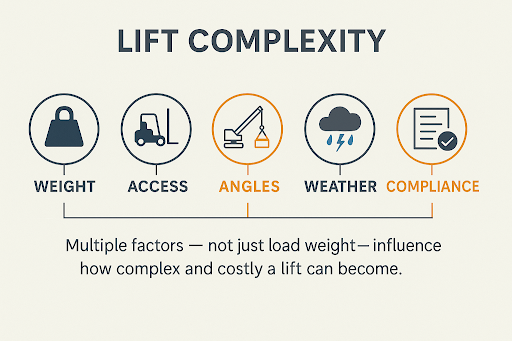
- Load weight and shape – Heavy or awkwardly shaped loads require detailed planning and stronger rigging gear.
- Boom reach and lift radius – Longer reaches reduce crane capacity and may demand larger, higher-rated cranes.
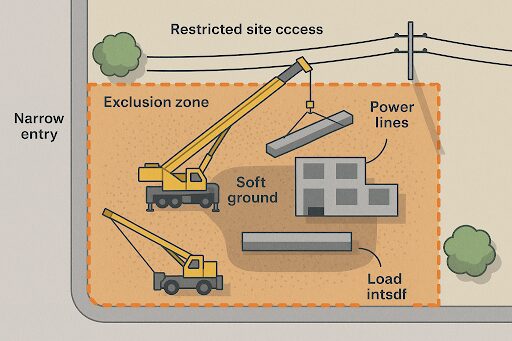
- Access and site conditions – Tight spaces, soft ground, or nearby power lines complicate setup and increase risk.
- Weather and wind – High winds or rain affect stability and can delay operations.
- Documentation and compliance – Complex lifts require more permits, paperwork, and qualified supervision.
In short, the more difficult the site or load, the more complex — and expensive — the lift becomes.
Example: Lifting a 10-tonne steel beam in an open industrial yard is straightforward. Lifting that same beam in Sydney’s CBD, surrounded by power lines and limited access, requires extra planning, permits, and a larger crane — all of which add to the cost.
🏗️ Weight: Every Tonne Counts
Weight is often the first element that impacts a rigging quote — but it’s not simply about how heavy the load is. The way that weight interacts with crane reach, ground conditions, and rigging configuration also plays a crucial role.
1. Crane Selection Depends on Weight and Radius
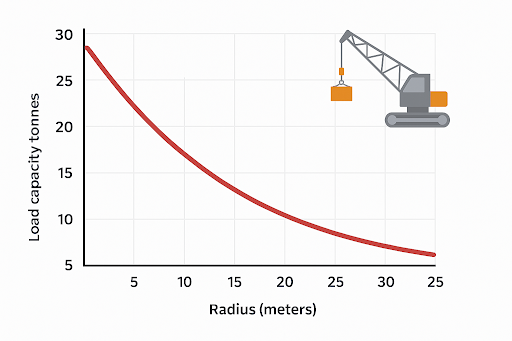
A crane’s maximum capacity decreases as its boom extends. For example, a 30-tonne mobile crane might lift its full capacity at a 5-metre radius, but only a fraction at 20 metres.
This is why professional riggers calculate load weight and radius together before quoting. Without this step, you could later need a much larger crane — dramatically increasing your costs.
2. Load Stability and Weight Distribution
When handling loads that are uneven or irregular in shape, maintaining equilibrium is paramount. Highly skilled riggers employ specialized tools such as spreader bars and lifting frames, combined with precise sling configurations, to ensure the load remains stable throughout the lift. This meticulous approach demands both time and expert knowledge, but it is non-negotiable for safety.
3. Safety Standards and Certifications
Under Australian Standards AS 2550.1 and AS 1418, cranes and lifting equipment must be inspected and certified regularly. Reputable rigging companies include this in their pricing to guarantee compliance and peace of mind.
💡 Tip: Always ask to see the company’s load charts, operator licences, and maintenance records before accepting a quote.
🚧 Access and Site Conditions: The Hidden Cost Drivers
Many clients assume that crane hire rates are based solely on size or duration. In reality, site access and layout are often the biggest cost variables.
Common Site Constraints That Raise Costs
- Tight entry or low-clearance areas → May require smaller cranes or staged lifts.
- Uneven or soft ground → Needs stabilisers or ground mats.
- Overhead power lines or underground utilities → Often demand repositioning or permits.
- Limited traffic control zones → Increase coordination time and safety oversight.
Providing detailed photos, dimensions, and access notes helps your rigging provider quote accurately — avoiding surprise costs or project delays.
Hard Bakka Rigging Insight: Sydney’s urban construction zones, especially in areas like Parramatta or the Inner West, frequently require compact cranes and precision rigging due to restricted access. Factoring this early prevents costly crane changes later.
📐 Angles, Boom Reach, and Radius: The Physics Behind Pricing
Crane hire pricing is heavily influenced by geometry — the boom length, lifting height, and radius determine what crane is needed.
1. Boom Reach and Capacity
As the boom extends, its lifting capacity drops.
- Short radius (5–10 m): Smaller cranes can handle heavier loads.
- Long radius (20–25 m): Requires a larger crane, higher insurance, and extra setup time.
2. Why Lift Planning Matters
Experienced riggers use digital lift-planning tools to model boom angles, radius, and load paths. This ensures the smallest possible crane can complete the job safely, saving both money and time.
3. The Role of Safety Margins
A proper lift plan includes a 10–20 percent safety buffer to account for environmental changes such as wind or load sway. Reducing this margin may lower costs but can breach NSW safety laws.
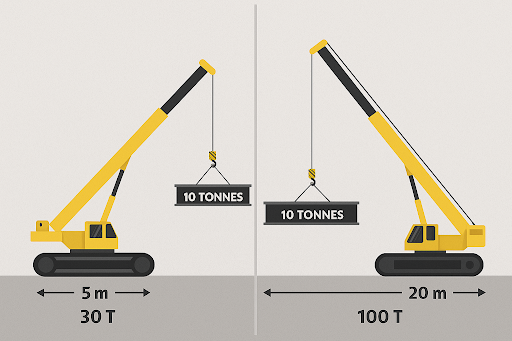
Example: A 10-tonne beam lifted at a 5 m radius may need a 30 T crane; at 20 m, it could require a 100 T crane — tripling the hire cost.
Lesson: Angles and distance matter as much as weight.
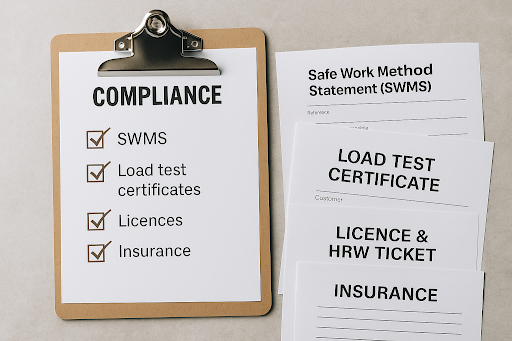
📄 Compliance, Documentation, and Insurance
A reliable rigging quote isn’t just about machinery — it’s about accountability. Without the proper documentation, your project may be exposed to compliance or insurance issues.
Essential Documents to Request
- Safe Work Method Statements (SWMS) – Detail procedures, hazards, and mitigation steps.
- Load Test Certificates – Prove crane and rigging gear integrity.
- Maintenance and Inspection Logs – Confirm routine safety checks.
- High-Risk Work Licences (HRW) – Verify operator qualifications.
- Insurance Certificates – Cover public liability and workers’ compensation.
Hard Bakka Rigging holds ISO 9001, ISO 14001, and ISO 45001 certifications, as well as AS/NZS 3834-2 compliance — guaranteeing every lift meets international safety and quality standards.
🔗 For reference, see SafeWork NSW’s Crane Safety Technical Report for detailed compliance guidelines.
🕒 Setup Time, Crew Skill, and On-Site Coordination
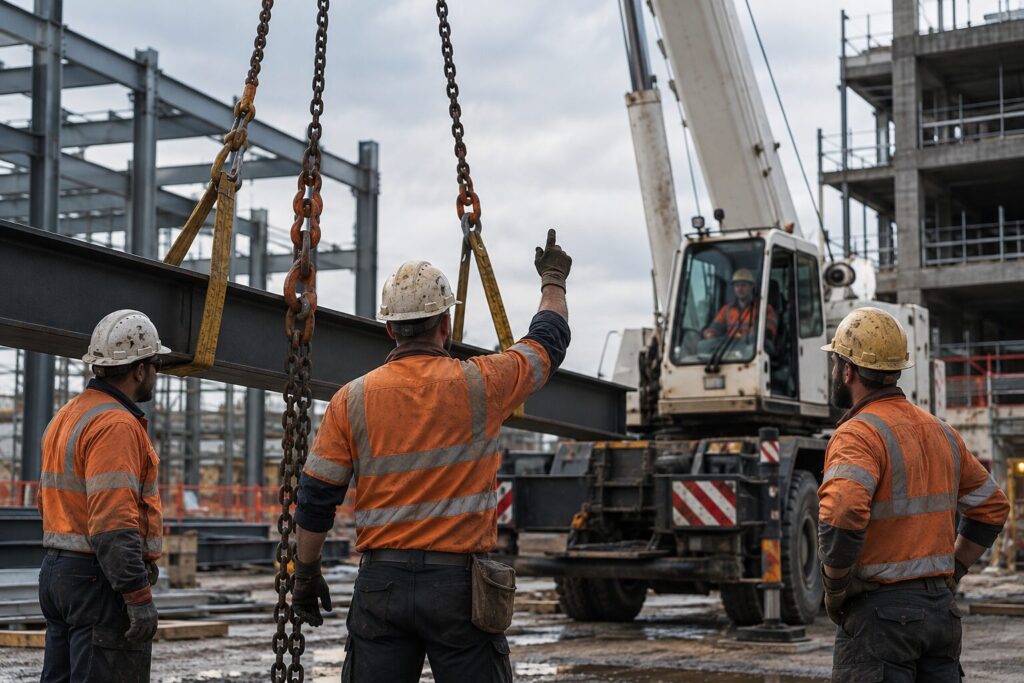
Every lift involves far more than operating the crane. Time, teamwork, and expertise directly influence efficiency and pricing.
Setup and Mobilisation
Before a single lift takes place, crews must:
- Conduct daily inspections and pre-start checks.
- Prepare and stabilise the ground.
- Assemble the boom and test hydraulics.
- Establish exclusion zones and signage.
These tasks ensure safety but require time and experienced personnel.
Skilled Labour and Efficiency
A well-run lift typically includes:
- Advanced Riggers (RA)
- Dogmen (DG)
- Crane Operators (CO)
- Spotters and Supervisors
Highly trained teams may cost more initially, but they complete lifts faster, safer, and with fewer disruptions.
Wet Hire vs Dry Hire
Choosing wet hire (crane + certified operator) often results in better safety outcomes and cost efficiency. Operators familiar with both the equipment and local regulations can complete lifts faster and avoid fines or downtime.
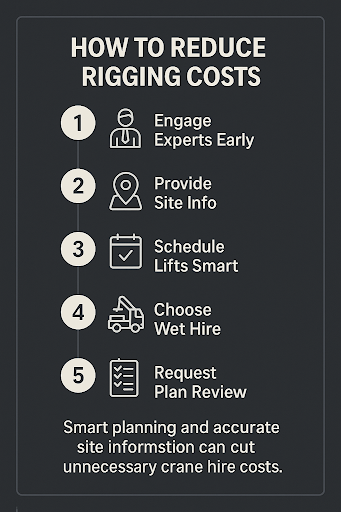
💡 How to Reduce Rigging Costs Without Compromising Safety
While many lift variables are fixed, smart preparation can lower your overall rigging costs.
1. Engage Rigging Experts Early
Bring your rigging provider into the planning stage. Early collaboration helps identify potential access, angle, or weight issues before they impact your budget.
2. Provide Detailed Site Information
Accurate drawings, photos, and measurements lead to precise quotes and prevent unexpected equipment changes.
3. Schedule Strategically
Plan around traffic restrictions and weather forecasts. Off-peak or weekend lifts may reduce road-closure costs and waiting time.
4. Choose Wet Hire for Peace of Mind
Wet hire includes both crane and operator, ensuring accountability and compliance from start to finish.
5. Request a Lift Plan Review
Ask for a detailed lift plan review outlining crane type, angles, and load paths. This ensures you only pay for what your project actually needs.
🧭 Book your free lift plan review with Hard Bakka Rigging — Sydney’s trusted rigging specialists.
🧱 Knowledge Lifts Your Budget Further
Understanding lift complexity gives you the power to compare quotes fairly, reduce risk, and make informed decisions.
At Hard Bakka Rigging, our certified team delivers precision, performance, and peace of mind across NSW and beyond — from large-scale projects like Snowy Hydro 2.0 to intricate urban installations at Western Sydney University.
Whether you need crane hire, steel erection, or on-site rigging supervision, we bring decades of expertise, ISO-compliant safety, and transparent pricing to every lift.
📞 Get Your Lift Quote Right — the First Time
Ready to plan a safer, smarter lift?
👉 Request a free lift plan review or detailed rigging quote today.
Hard Bakka Rigging — Steel Rigging. Precision. Performance.
📧 sales@hardbakkarigging.com.au
📞 0405 722 721 | 0415 878 744
🌐 www.hardbakkarigging.com.au 0415 878 744
📩 sales@hardbakkarigging.com.au
https://hardbakkarigging.com.au/contact-us